Nicholas
Goldberg
Mechanical engineer. I design the mechanism, build it, wire it, and test it until it works.
B.S. Mechanical Engineering · Boston University · May 2027 Pick a project, or use → / swipe to go in order.8,000 gallons, modeled from the tank out.
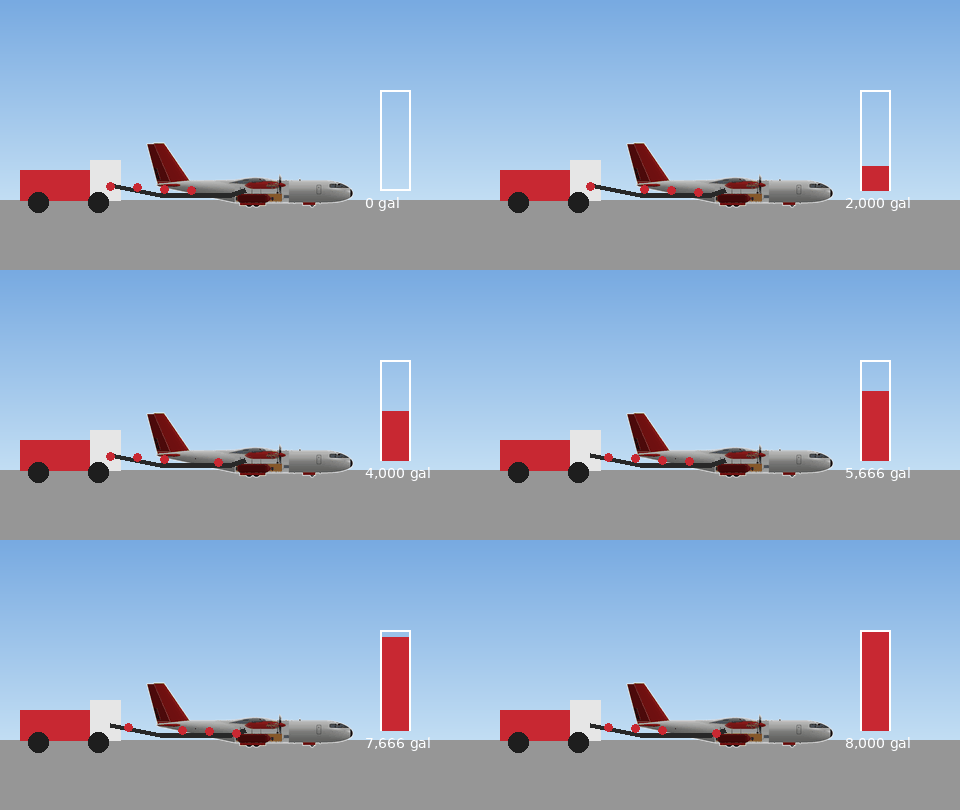
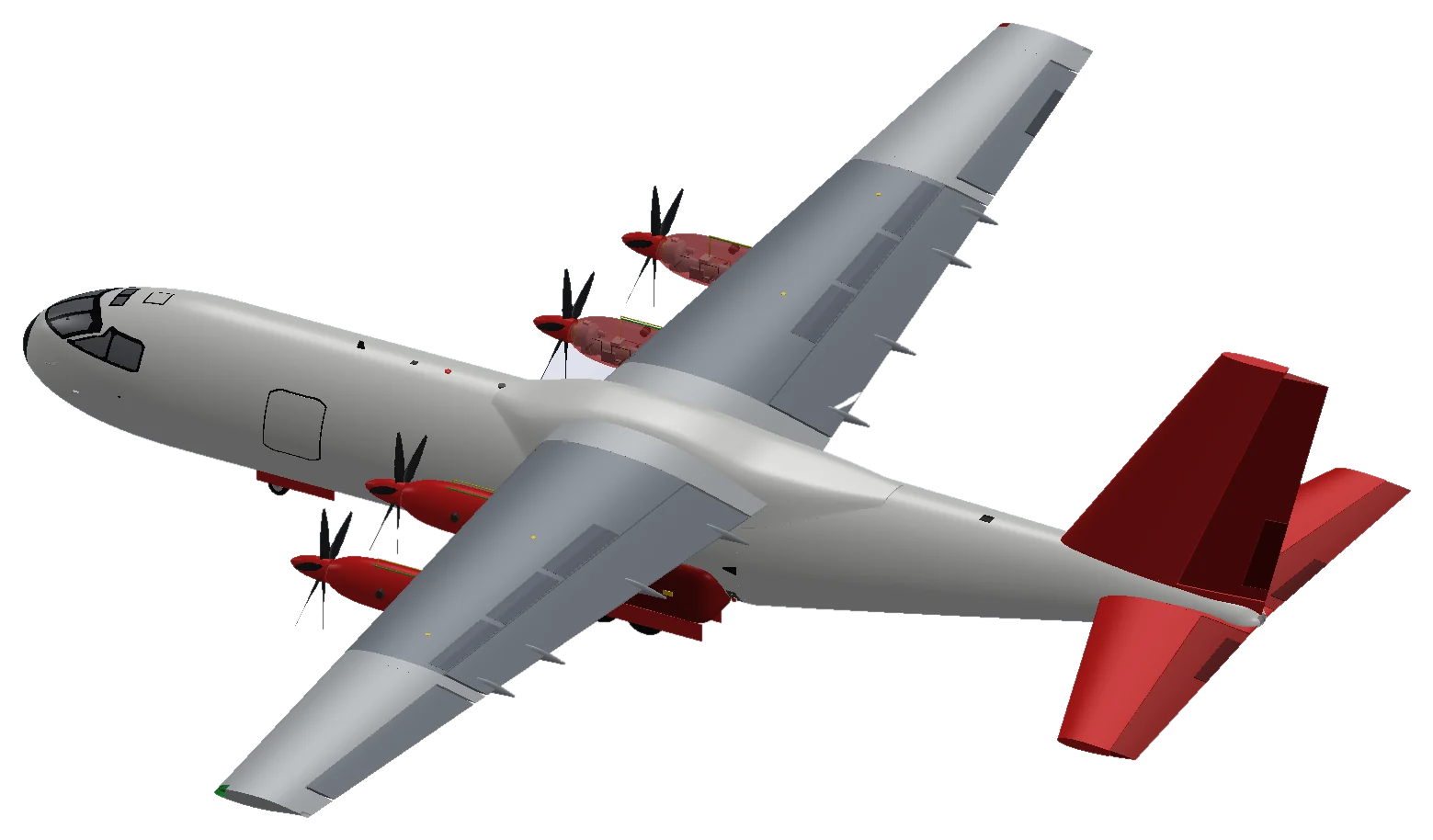
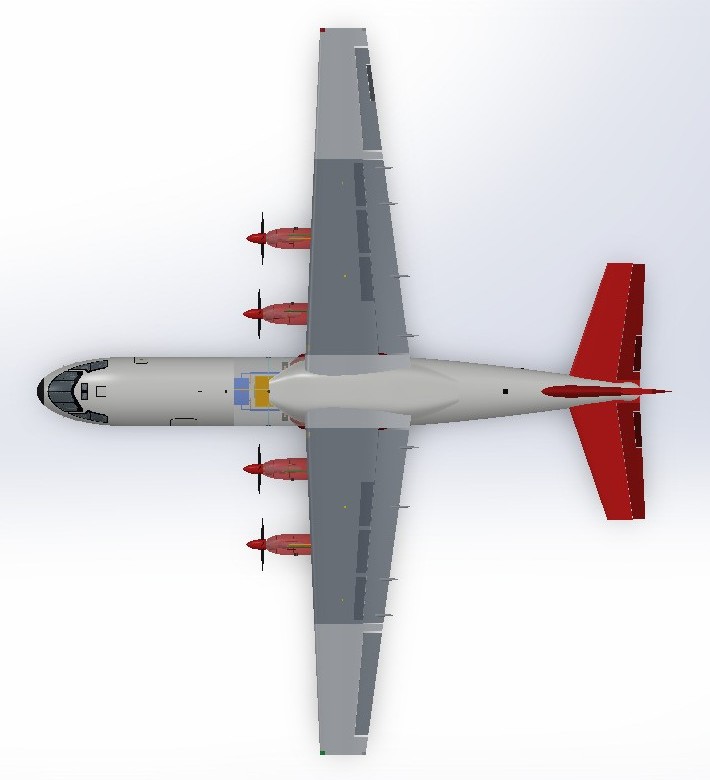
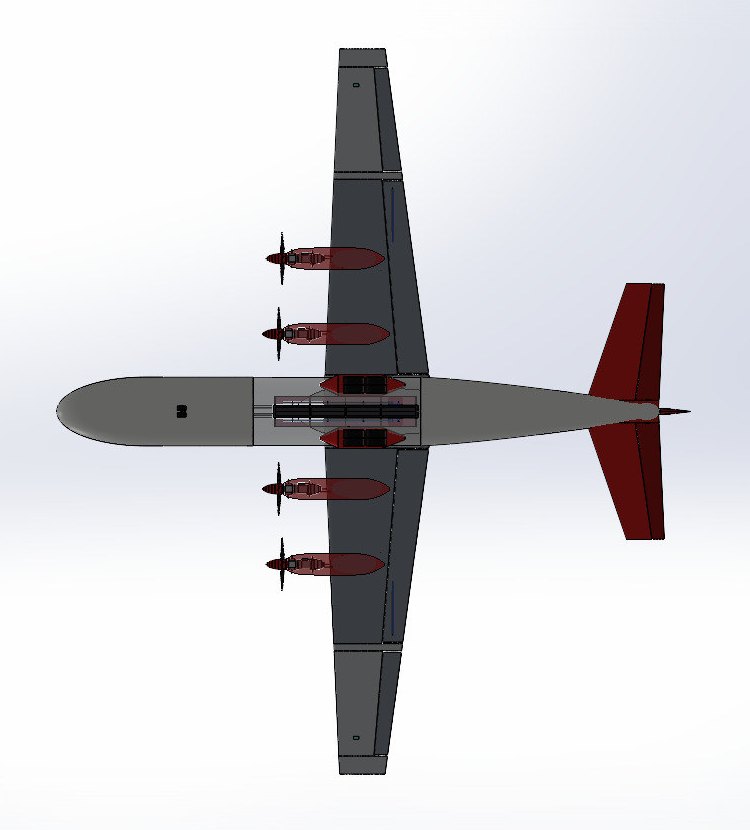
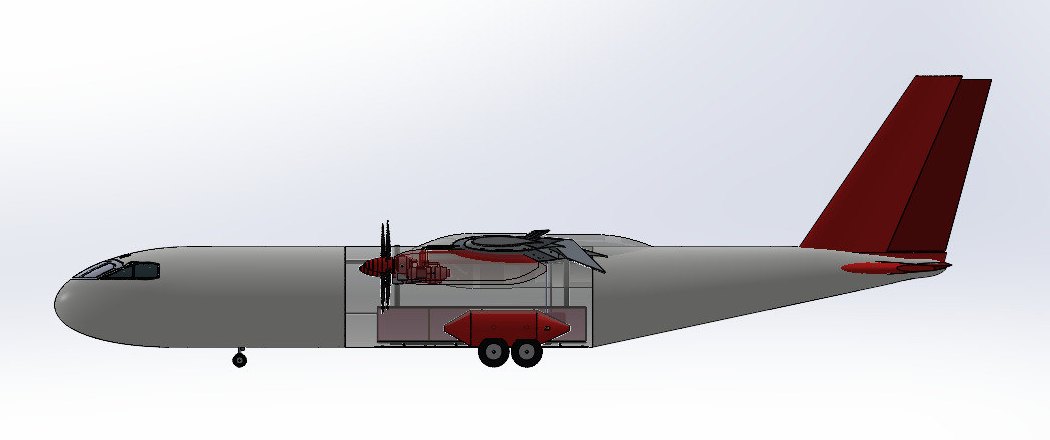
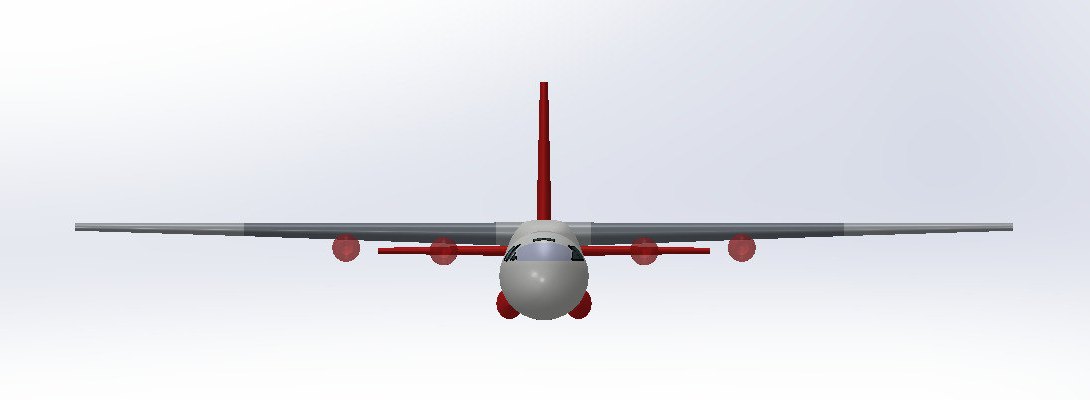
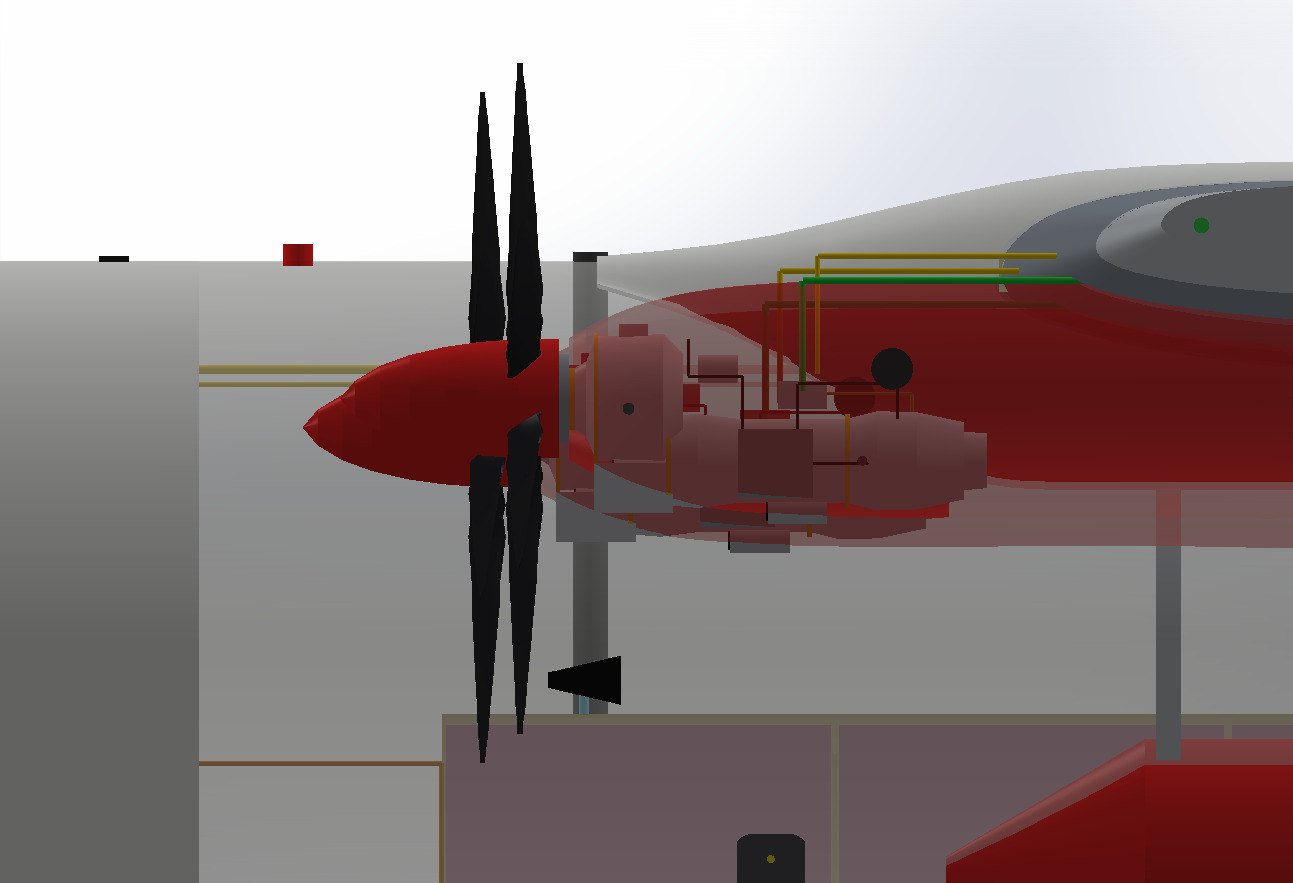
I built and maintain the team’s full-aircraft SolidWorks assembly. I started from the 8,000-gallon retardant tank and built the airframe around it. I also run the structural FEA on it (next sheet).
Sized for the lowest cost per gallon.
Our sizing spreadsheet searched thousands of candidate airplanes, threw out any that broke one of 17 hard rules (runway, drop speed, engine-out climb, balance), and kept the one with the lowest cost per gallon delivered.
- Why more gallons cost less. Crew, flight time and airframe wear are paid per trip. Carrying 8,000 gallons spreads them over more retardant: $15.97 a gallon, vs. $17.05 at 7,000.
- Engines vs. cost. Bigger engines would reach the 5,000 ft runway and 400 kt stretch goals, but at $21–36 a gallon. We met every must-have and kept the cheaper airplane.
- Materials. 7075-T6 aluminum for the upper wing skin and spars (strong in compression), 2024-T3 for the lower skin and ribs (resists cracking in tension), and titanium for the tank doors and belly frame, which sit in corrosive retardant right above the fire.
Cost to deliver one gallon of retardant to the fire, including fuel, crew and the airplane itself.
A slower drop needs a bigger wing to keep flying. Our 125 kt goal needs 2,840 ft², exactly the wing we chose.
I loaded the wing box to 1.5× the hardest pull-up (3 g). Color is stress: blue low, red high. Each zone’s stress is compared with the most its material can take (published aerospace values for 7075-T6 and 2024-T3). The margin is how much stronger than needed it is: +0.01 means 1% to spare, and anything above zero passes.
Does the answer depend on the mesh?
To solve it, SolidWorks splits one half of the wing box (held fixed where it meets the body) into small 3D pieces called elements. “Element size” is how big each piece is, not the wing. I ran it three times with smaller and smaller pieces:
| Piece size | 4.0 in | 2.8 in | 2.0 in |
|---|---|---|---|
| Points solved (nodes) | 129k | 259k | 489k |
| Wingtip bends up at 1.5× load | 57.83 in | 57.85 in | 57.87 in |
The wingtip result barely moved (under 0.1%), so the answer is set by the design, not the mesh. The single highest-stress spot rose 12% with smaller pieces, which is normal at sharp corners.
The same aircraft, cut into 32 printable parts.
A 1:44 flying model of the airtanker. The full-scale CAD was simplified so every part prints on a desktop printer and the plane can test a real liquid drop.
- Simplified to print. Lightweight PLA airframe split to fit the bed, with a PETG tank and doors.
- Two belly doors. Servo-driven gates release the payload all at once or rear door first for a longer trail. What we drop is still being decided.
- Flight stack. Four brushless motors, a flight controller running INAV, and nine servos.
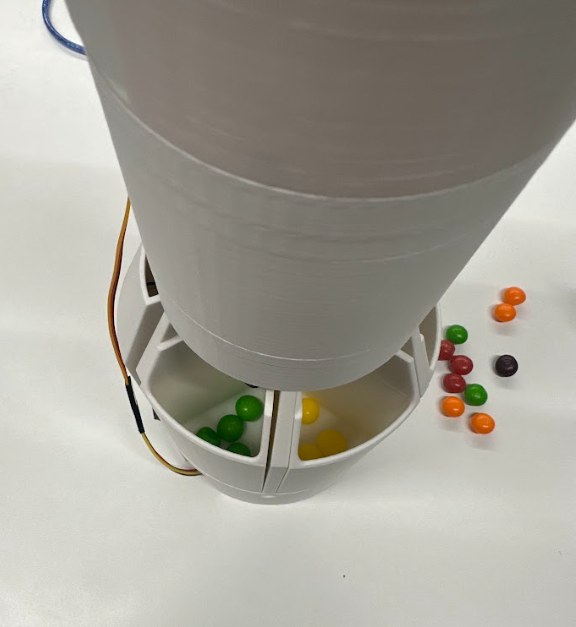
97 of 100 Skittles, sorted by color.
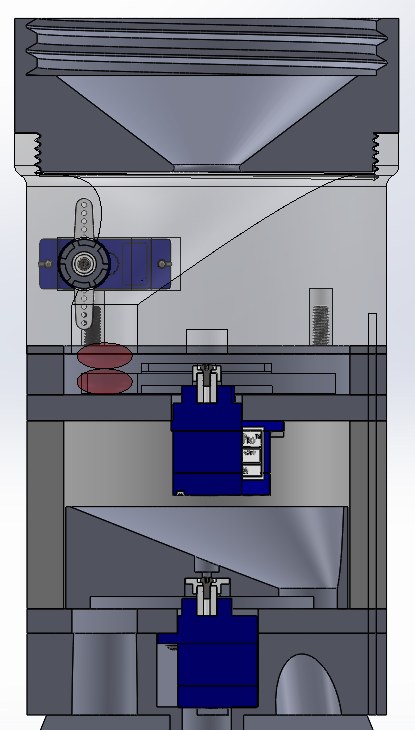
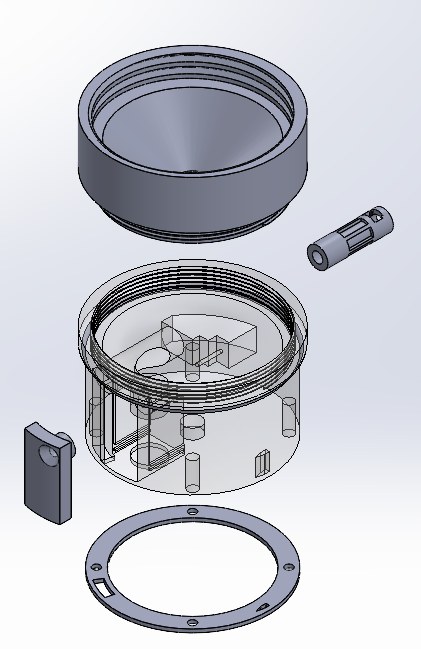
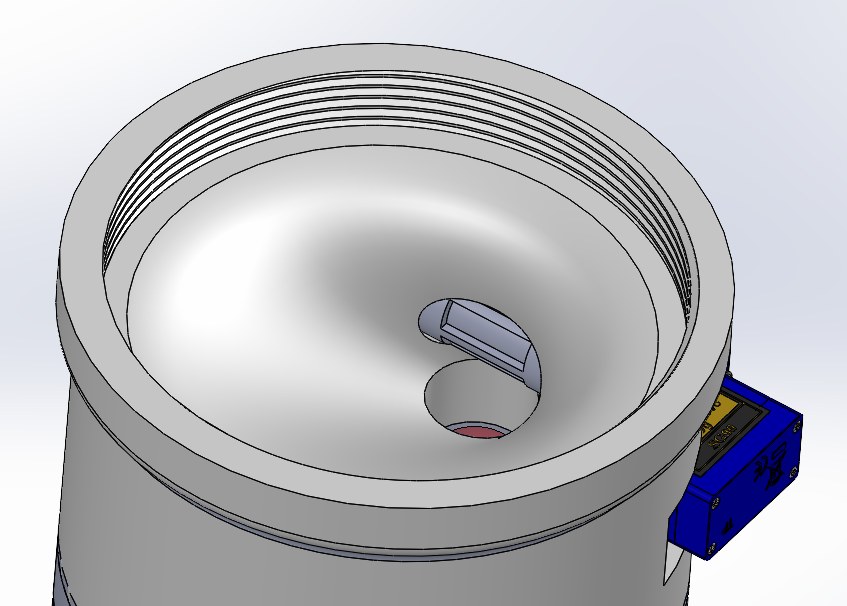
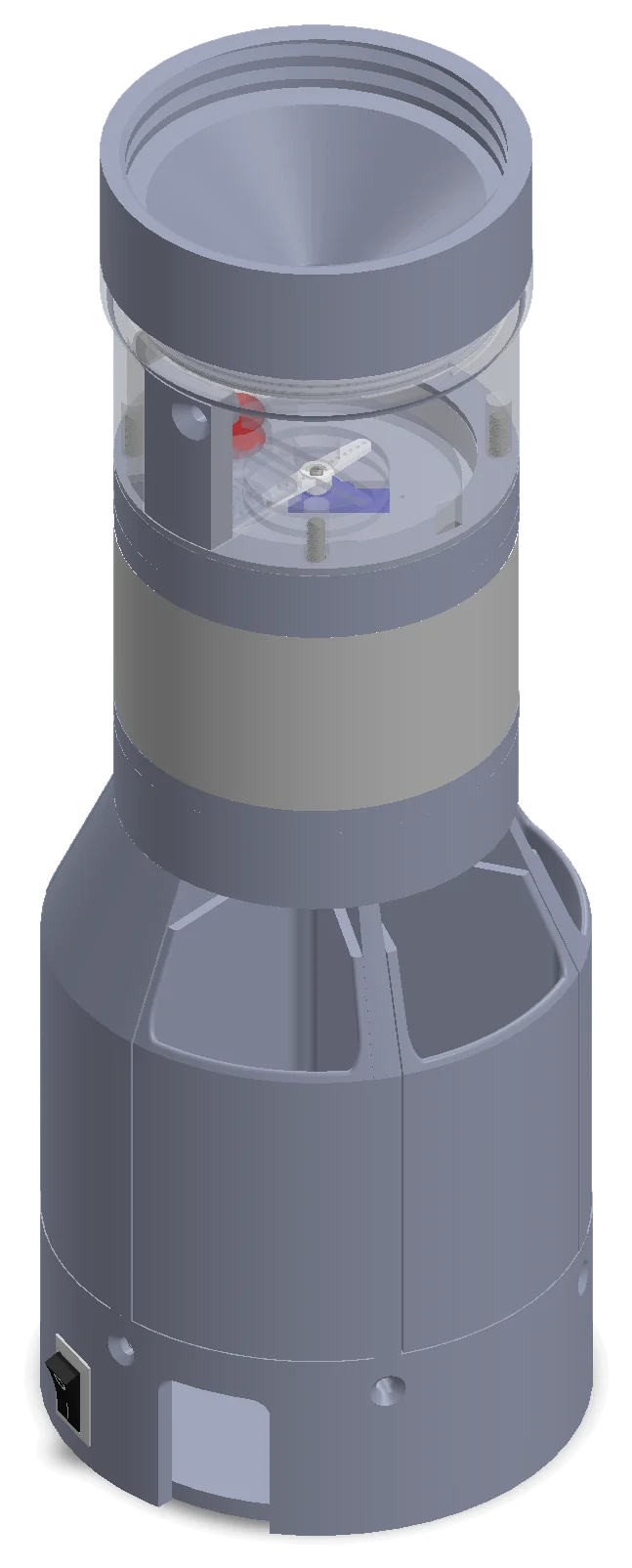
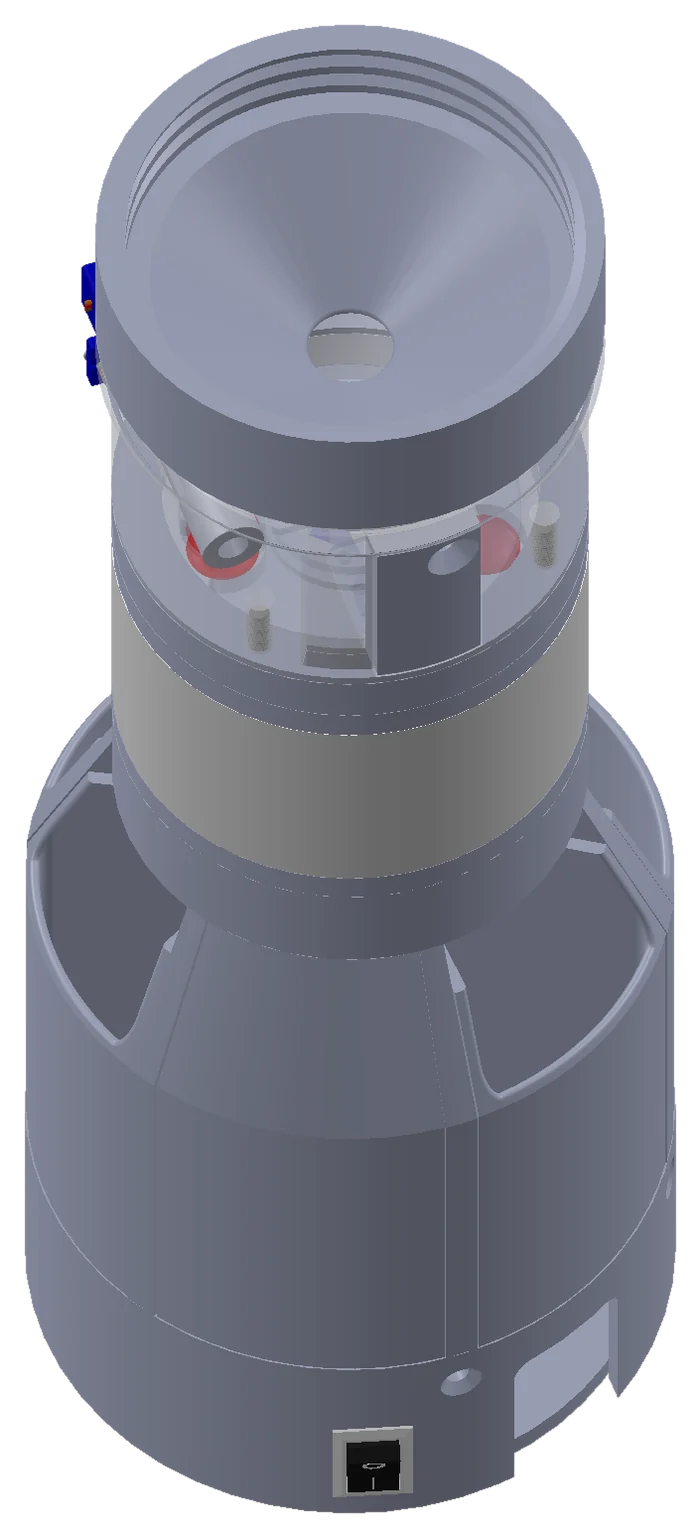
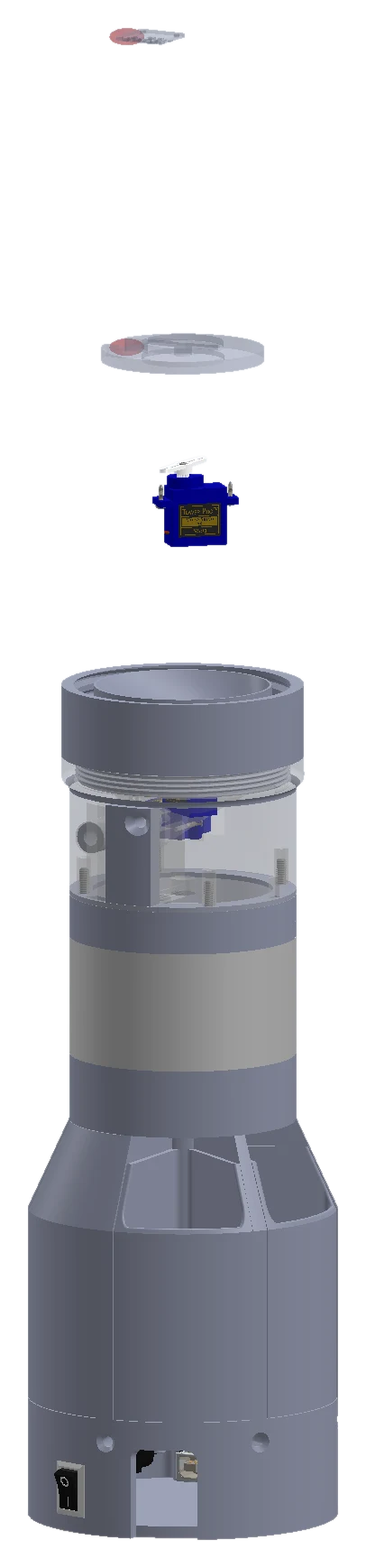
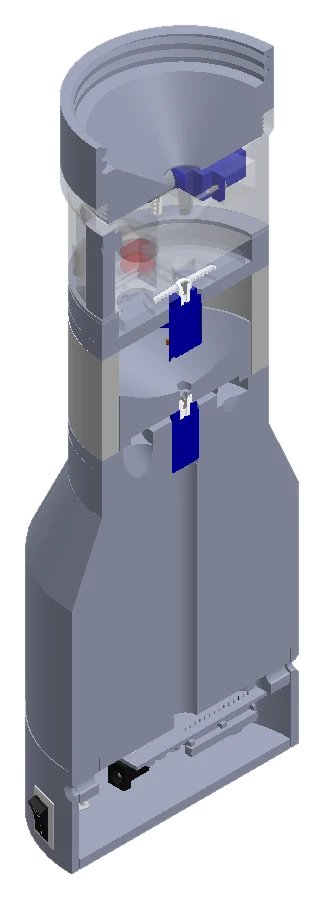
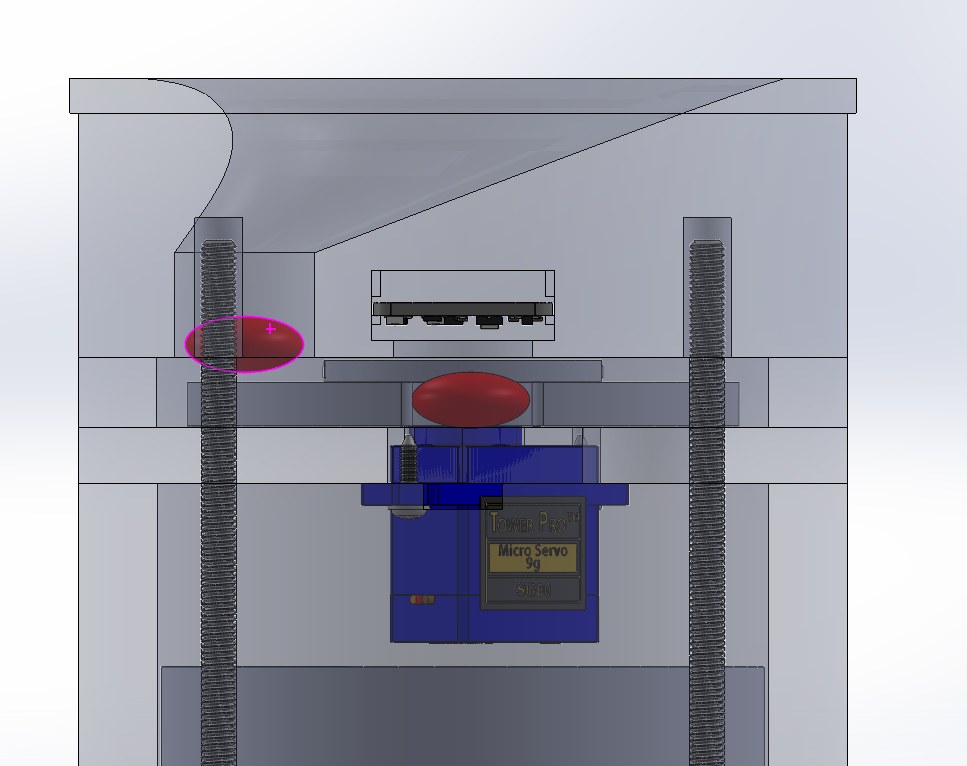
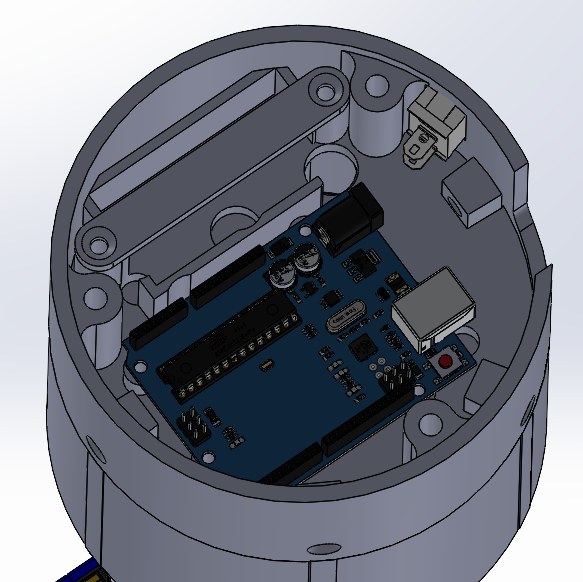
I designed the whole machine in SolidWorks: every printed part, the candy path, the servo mounts and the electronics base.
One stack, four long screws.
- Screws and inserts. Four M4 × 0.7 × 100 mm stainless flat-head screws (McMaster 92010A823) run through every stage. I left clearance holes for them in each part, and they thread into brass heat-set inserts, so it can be taken apart and rebuilt.
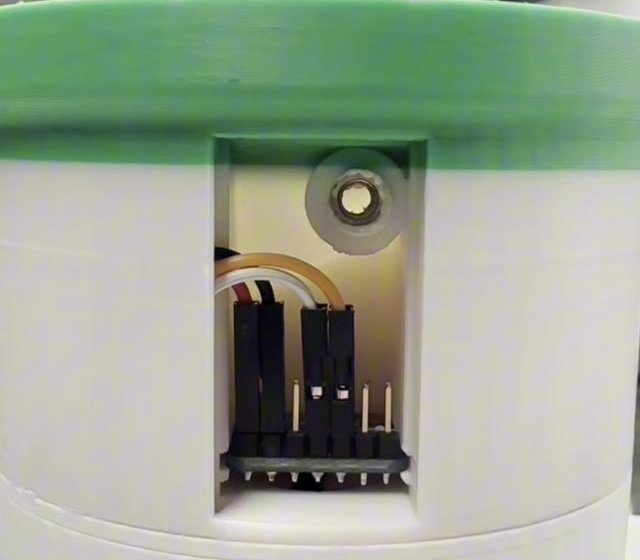
- Wire paths. Channels inside the walls carry the servo and sensor wires down to the base, so no wire crosses the candy path.
- Electronics base. Arduino Uno, 9 V battery and on/off switch, with lever connectors tying every ground together.
- Magnetic bins. Magnets glued into holes in the base, plus one in a small pocket under each bin (away from the candy), hold the bins in place when you carry it.
Tested, found the jam, fixed it.
- The RGB sensor. A TCS34725 reads red, green and blue, with an IR filter. It sits on a slide-in shelf inside the housing, so room light can’t change the reading.
- Accuracy. 20 Skittles of each color, 100 total: 97 sorted correctly. Only red and orange were ever confused.
- Jamming. Every run passed with 1–3 Skittles dropped at once, but only 60% passed at 4 and none at 7. That data is why we added servo 1, the agitator.
An X-Y gantry that maps a surface with sound.
A belt-driven gantry sweeps an ultrasonic sensor over an object. Every reading becomes one cell of a height map.
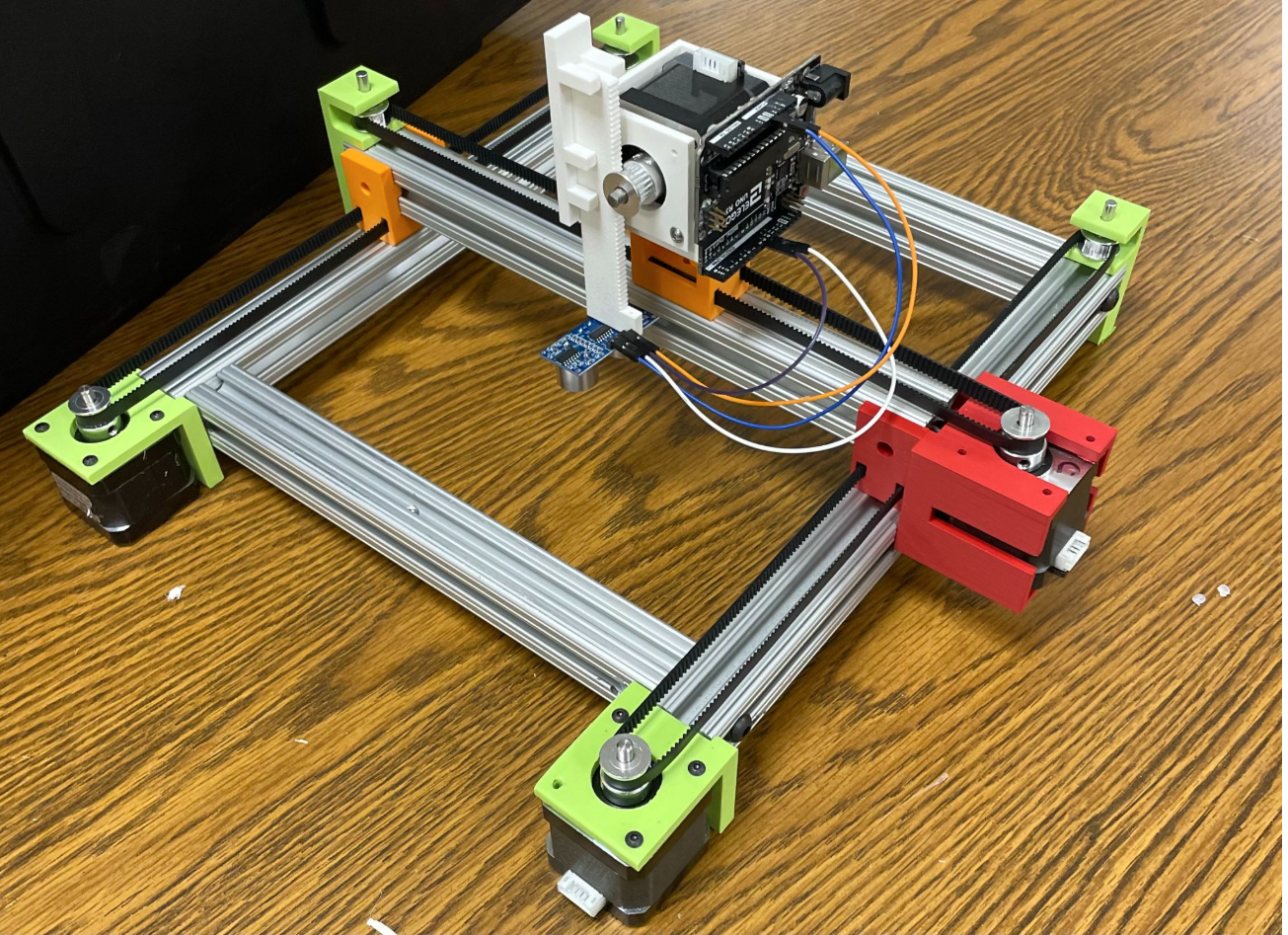
Prove each axis
Moved each axis by hand in Repetier-Host to check travel and alignment.
Raster the plane
Code drives the carriage back and forth in rows, pausing at each point to read.
Turn distance into an image
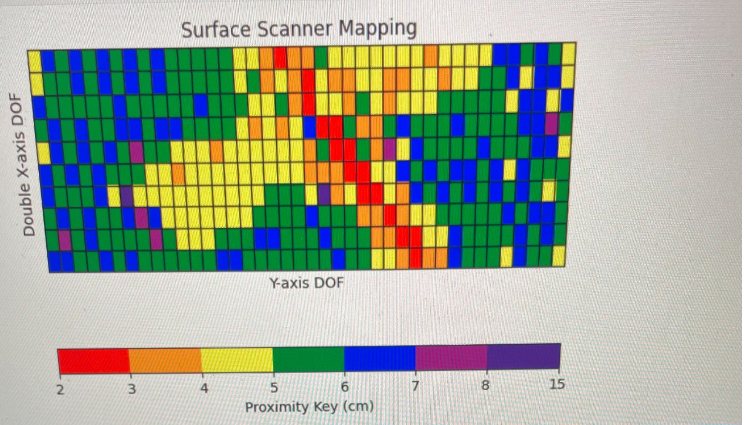
Python plots each reading. Closer surfaces show warm, so the object’s outline appears.
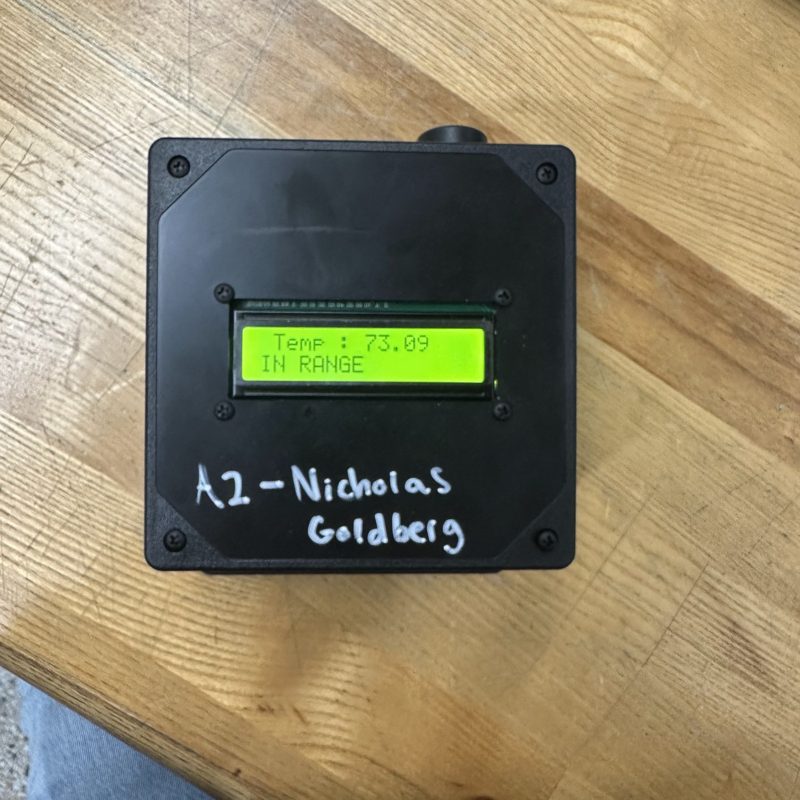
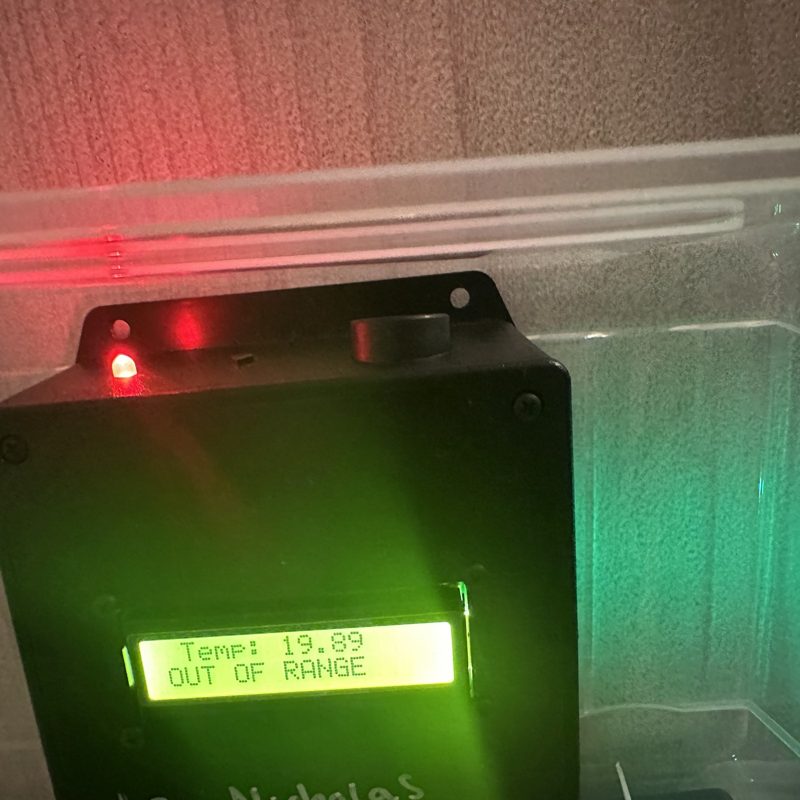
A room monitor I modeled, built, soldered and coded.
A solo build, guided by my professor. It shows the temperature live: green light inside the set range, red light and a buzzer outside it.
- CADMy first Onshape project: I modeled the enclosure and a battery holder around the real parts.
- MakeManufactured the parts, then fit the display, switch, LEDs and USB port through the box and locked the 9 V battery into its holder.
- WireSoldered the leads and traced every wire to its pin: sensor to A0, display on I²C, LEDs and buzzer on their own pins.
- CodeSet a temperature range on the Arduino. Outside that range, it switches to the red LED and beeps.
A fan that turns on when it’s hot or loud. No microcontroller.
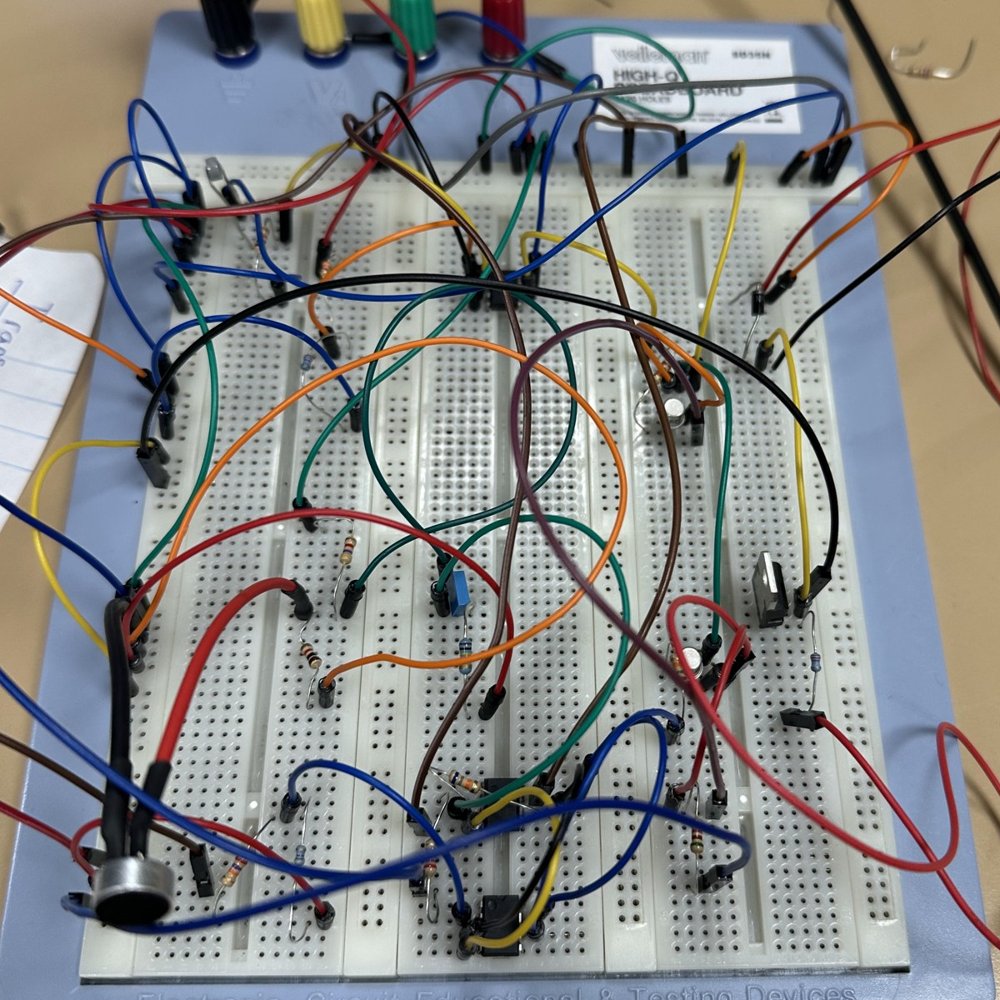
Microcontrollers weren’t allowed: the course wanted us to learn amplifiers, comparators and transistor switching by building them. So it’s all analog, on one breadboard.
- Heat. An NTC thermistor loses resistance as it warms, raising its divider voltage. Past ~4 V the comparator flips high.
- Sound. The mic gives only 100–200 mV, so an LM741 amplifies it ~23× and a second op-amp compares it to a set noise level.
- Switch. Each comparator drives a 2N2222A. Wired in parallel, either one turns on the TIP120 that powers the fan.
- Protect. A 1N4004 diode across the fan absorbs the motor’s shut-off spike.
Replate: surplus food, half off.
An app where cafés, restaurants and grocers list unsold food for pickup. Buyers pay only the food price: at least 50% off, $4 minimum. Planned BU launch: September 2027.
The five of us built the business together: interviews, business model, pricing and the 5-year financial model. My part of the model was the cost side: running expenses and assets, each tied to the launch timeline.
- How it earns. Stores pay 10% of each order, about $0.60 on a $6 order, which also covers card fees. Too Good To Go charges stores $1.79 a bag plus $89 a year.
- Grounded in interviews. 12 interviews with students, store staff and a grocery manager.
- Funding plan. Seed money and food-security grants first, then a Series A from a food-waste investor such as S2G, which led Flashfood’s Series A.
Year 1 runs lean: no office (we work from BU’s BUild Lab), $1,000 a month of store outreach to sign 40 stores before launch, then a $5,000 launch push in September.
Let’s build something that moves.
I’m looking for full-time roles in machine design, product design and mechatronics, starting in 2027. I started out building LEGO and never really stopped.
- SolidWorks parts, assemblies, drawings
- SolidWorks Motion
- Design for 3D printing
- Onshape
- Arduino (C++)
- Steppers and servos
- Analog circuits
- Python
- Oscilloscope
- Sensor calibration
- Dynamics, free-body diagrams
- Trade studies, cost per unit
- Financial modeling